Automatic Draft Registration: Not Just a Bad Idea, It’s the Law

by Wayne Finegar
One of the less heralded elements of the 2026 National Defense Authorization Act enacted in December of 2025 was the requirement that the Selective Service System begin the automatic registration of adult males between the age of 18 and 26. As of the writing of this, these automatic registrations are to begin in December of 2026.
So far, the two sentences above are all that anyone officially knows about what is going to happen. There are no regulations in force, nor have any even been proposed yet. Which means that 6 months before this radical change to an already broken system, there are many questions and guesses, but little else.
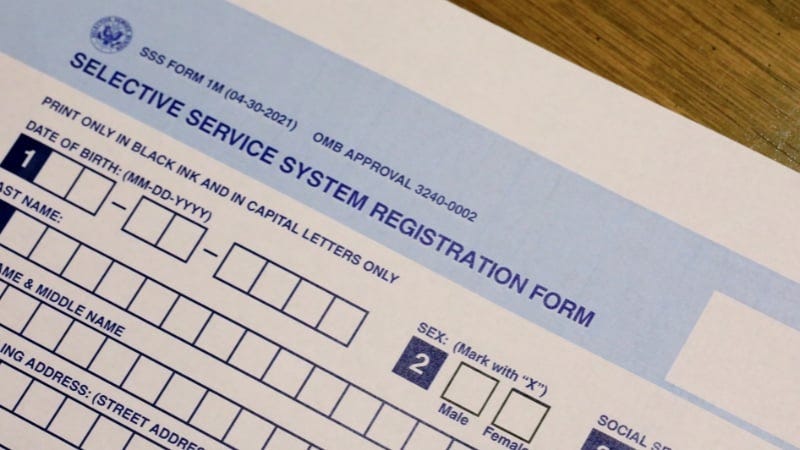
Since 1980, men born on or after January 1, 1960, have been required to register with the Selective Service System. Originally, this was done by filling out a paper form at the post office. Over time, many states enacted laws requiring automatic registration when these people applied for a driver’s license. By the time the 2026 NDAA became law, only 6 states didn’t have a system for automatic registration. But the 44 that do have such systems still included some kind of affirmative action by the young man. Either application for a license (most states, territories, and the District of Columbia) or seeking other state provided benefits (5 others) was a necessary triggering action.
New Law, Little Instruction, Many Questions
Now, with the requirement of national automatic registration, the Selective Service System itself will do the registration. The law provides that the agency may ask any “Federal entity” to provide the name, date of birth, address, social security number, phone number, and email address of any person subject to registration. There are no apparent limits on what entities the agency may seek this information from, despite the existing laws that restrict access to tax records of the IRS, or to the data of the Social Security Administration. Considering the efforts to evade these limits by the DOGE fiasco, it seems reasonable to assume that it isn’t an accident that the Selective Service System has been given the freedom to scrape information from every entity without any limit.
The only other instruction that the NDAA gives about how this automatic registration will work is that each person registered will be given written notification that they have been registered as well as being told of any procedures to correct the registration “if such person is not required to be so registered.” There aren’t provisions for correcting errors beyond this.
So, as of now, a person who is automatically registered after December 18, 2026 may not be able to tell the Selective Service System that there is an error in their name, that they have moved, that they have gotten a new phone number, nor that they have a new email address. For that matter, we don’t know what it means to not be required to be registered. It has been the case that anyone assigned as male in gender at birth must register. But with the current efforts to force anyone who is transgender out of the military, does this mean that transwomen are not required to register? More basically, what happens if the written notification never reaches the person? A bad address, a changed phone number, or a dead email address is all it might take to prevent that notification.
An Accidental Opportunity for War Resisters?
Until there are proposed regulations, we won’t know exactly how the Selective Service System is going to try to answer these questions. Or even if they are going to try to. But there may be an unforeseen benefit to anyone who is opposed to the draft or to wars.
One of the issues that has frustrated Quaker House and our allies who work to oppose recruitment of young adults into the military and to prevent a return of the draft has been the inability to tell the government that you are opposed to war in all of its forms. Neither the paper registration form nor the online form provide a place for someone to indicate that they are a conscientious objector. In our book on how to discern if you are a conscientious objector and how to document that objection, Quaker House describes ways to attempt to correct this omission. They include writing it into the margins of the paper form and making a copy of it before submission. Or replying to the letter of acknowledgement from the Selective Service System by writing to say that you are an objector and hoping to get a letter back from the agency noting that they don’t have the ability to record that objection.
Recently I was able to be part of a telephone conference with members of the Selective Service System and the Office of Management and Budget. I spoke to them in my capacity as a volunteer member of the Cumberland County, North Carolina Draft Board. (there will be a later article about this). The draft of the regulations that will eventually be propounded to implement automatic registration has to be approved by OMB before they can be published. Illogically, OMB is required to provide an opportunity to people to speak to the coming regulations even though they haven’t seen the proposed text. This is how I was able to request this conference, and likely my status on the draft board is how I was able to be scheduled.
I proposed that the regulations require that a part of the process for responding to the notification letter not just include people are not required to register. Instead, it should include the opportunity to correct data errors like those listed above AND to allow for the person to indicate a reason that they would be exempt from conscription in any actual draft. I used the example of a person with a physical limitation that would result in exemption, since these people are required to register regardless of any such limitations. My argument was that the Selective Service System could take the opportunity to gather information or even fully process these claims for exemption in advance. Doing so when there isn’t a draft would save time and effort.
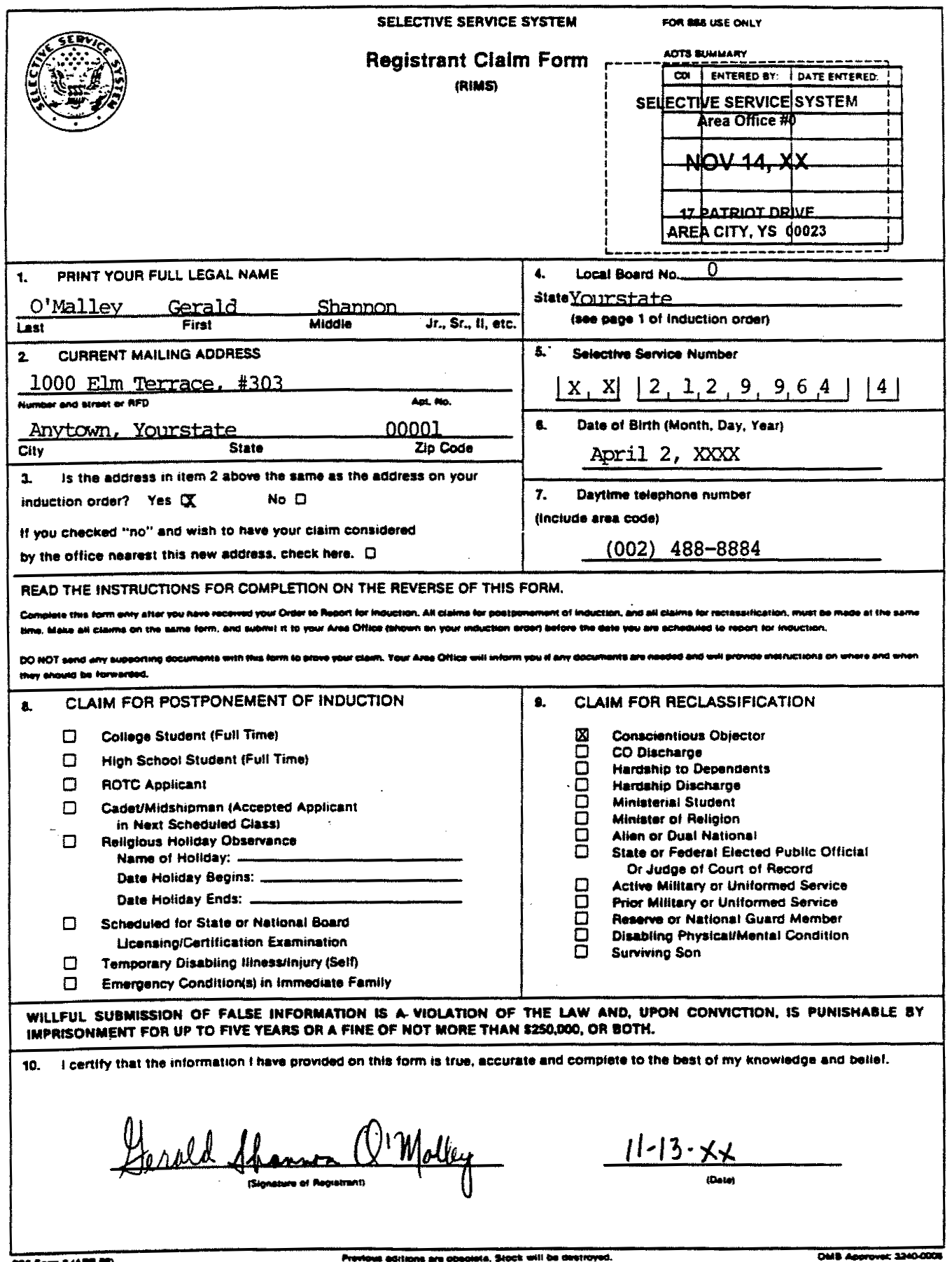
More importantly, this would allow people to immediately indicate their objection to war in an official manner. The newly turned 18-year-old would only have to click a box on an online form and it would be stored as part of their record. If there came to be a draft three years later, that part of their record would instantly eliminate any arguments that their opposition to war was based on opposition to the “current situation” or to “just this war.” They would already have a provable, official record of their opposition to war.
Who would most benefit from this opportunity? The groups of people who have been the traditional cannon fodder of the draft. The children of wealthy, well-educated people have always been able to avoid being conscripted into the military. Whether they paid someone else to take their spot (Civil War), got their doctor to certify they have a health condition (my grandfather in World War II), or just went to college (Vietnam War) there have always been options. The people of color (in the Civil War this included the Irish), the poor, the people who have been let down by the destruction of public education. These are the people who may not have the opportunity to attend a workshop telling them how to build a file to document their opposition to war. But if they have that box to click, they could at least have something to help protect them.
What’s Next?
Until the regulations are actually published, we won’t know more about how automatic registration will be supposed to work. Until then, we won’t know what options there may be to oppose registration as a whole, or what ways there may be to subvert the system.
Here, in a week or so, there will be a discussion of what an actual draft might look like in 2026. The confusion of passing a law mandating automatic registration without knowing how to actually make it happen will look smart and well considered when compared to what a draft would be.
Stay tuned……